News
News
ISO 13485 Explained: What Hospital Bed Manufacturers Must Know
What Is ISO 13485?
ISO 13485 is the international standard for medical device quality management systems (QMS), published by the International Organization for Standardization (ISO). The current version is ISO 13485:2016.
The standard specifies requirements for a QMS where an organization needs to demonstrate its ability to provide medical devices and related services that consistently meet customer and applicable regulatory requirements.
Key scope:
Applies to all medical device manufacturers, including hospital bed makers
Covers the entire product lifecycle: design, production, installation, servicing
Risk-based approach throughout the QMS
Strong focus on documentation and traceability
Mandatory post-market surveillance
Note: ISO 13485 is a QMS standard, not a product standard. It certifies that the manufacturer has quality processes - not that any specific product is safe. Product safety is certified separately (CE Mark for EU, FDA 510(k) for US).
Why ISO 13485 Matters for Hospital Bed Buyers
For buyers (hospitals, distributors, government procurement), ISO 13485 certification provides:
1. Regulatory Compliance
Most regulated markets require ISO 13485 (or equivalent) as a prerequisite for market access:
EU: ISO 13485 + CE Marking under MDR 2017/745
US: FDA Quality System Regulation (21 CFR 820), which is harmonized with ISO 13485
Canada: Health Canada MDSAP program (which incorporates ISO 13485)
Australia: TGA requires ISO 13485 certification
Japan: PMDA accepts ISO 13485 for registration
2. Risk Reduction
ISO 13485-certified manufacturers have documented processes for:
Design verification and validation
Supplier qualification and incoming material inspection
Production process controls
Nonconforming product identification
Corrective and preventive actions (CAPA)
Post-market complaint handling
3. Supply Chain Confidence
Certification signals that the manufacturer has invested in quality infrastructure and undergoes regular third-party audits.
6 Core Requirements of ISO 13485
Requirement 1: Quality Management System (Clause 4)
The manufacturer must establish, document, implement, and maintain a QMS. Required documentation includes:
Quality policy and objectives
Quality manual
Documented procedures and records
Scope of the QMS
Exclusions and justifications (if any)
Example: ICARE maintains a 200+ page quality manual covering all ISO 13485 clauses applicable to hospital bed manufacturing.
Requirement 2: Management Responsibility (Clause 5)
Top management must demonstrate commitment to the QMS:
Communicate the importance of meeting customer and regulatory requirements
Establish quality policy
Conduct management reviews (typically quarterly)
Ensure adequate resources
Requirement 3: Resource Management (Clause 6)
The manufacturer must determine and provide adequate resources:
Human resources (competent personnel)
Infrastructure (buildings, equipment, utilities)
Work environment (contamination control, ESD protection if applicable)
Contamination control (relevant for sterile devices, less critical for beds)
Requirement 4: Product Realization (Clause 7)
The largest clause, covering:
Product realization planning
Customer-related processes (contract review, communication)
Design and development (planning, inputs, outputs, review, verification, validation, transfer)
Purchasing (supplier evaluation, purchasing information, verification of purchased product)
Production and service provision (production controls, installation, servicing)
Control of monitoring and measuring devices (calibration)
For hospital beds, this includes design control for new bed models, supplier qualification for components (motors, casters, mattresses), and production process controls for welding, painting, and assembly.
Requirement 5: Measurement, Analysis, and Improvement (Clause 8)
The manufacturer must monitor and measure QMS effectiveness:
Monitoring and measurement (customer satisfaction, internal audits, process monitoring, product inspection)
Control of nonconforming product
Analysis of data (trend analysis, complaint analysis)
Improvement (CAPA - corrective and preventive actions)
ICARE conducts monthly internal audits, quarterly management reviews, and annual third-party audits by TÜV SÜD.
.
Requirement 6: Risk-Based Approach (Throughout)
ISO 13485:2016 emphasizes risk management throughout the QMS:
Risk management file for each product
Risk analysis during design (per ISO 14971)
Risk control measures
Residual risk evaluation
Risk management review post-production
For hospital beds, risk analysis covers electrical safety (motor hazards), mechanical safety (pinch points, entrapment), fire safety (materials), and biological safety (skin contact materials).
ISO 13485 Certification Process
Step 1: Gap Analysis (1-2 Months)
Assess current QMS against ISO 13485 requirements. Identify gaps and create an implementation plan.
Cost: USD 5,000-15,000 (consultant fees)
Step 2: QMS Development and Implementation (3-6 Months)
Develop missing documentation, implement processes, train employees, and establish records.
Cost: USD 20,000-50,000 (internal staff time + consultants)
Step 3: Internal Audit and Management Review (1-2 Months)
Conduct a full internal audit covering all ISO 13485 clauses. Address findings and conduct management review before external audit.
Step 4: Stage 1 External Audit (1-2 Weeks)
The certification body (notified body) audits documentation and readiness. Identifies any major gaps before Stage 2.
Step 5: Stage 2 External Audit (1-2 Weeks)
On-site audit of actual implementation. Auditor reviews records, interviews staff, observes processes, and inspects facilities.
Outcome: If compliant, certification is issued.
Step 6: Ongoing Surveillance (Annual)
Certified manufacturers undergo annual surveillance audits (typically 1-2 days on-site) plus a full re-certification audit every 3 years.
Annual cost: USD 10,000-25,000
ISO 13485 Certification Costs
| Cost Component | Typical Range (USD) |
|---|---|
| Gap analysis (consultant) | $5,000 - $15,000 |
| QMS development (consultant + internal) | $20,000 - $50,000 |
| Initial certification audit | $15,000 - $30,000 |
| Annual surveillance audit | $10,000 - $25,000 |
| Re-certification audit (every 3 years) | $15,000 - $30,000 |
| Internal audits and management reviews | $5,000 - $15,000 |
| Total first-year cost | $50,000 - $120,000 |
| Total annual ongoing cost | $15,000 - $40,000 |
For small manufacturers, costs may be lower. For large manufacturers with multiple product lines and facilities, costs can exceed USD 200,000 annually.
Common Certification Bodies (Notified Bodies)
ISO 13485 certification is issued by accredited certification bodies. Major bodies include:
TÜV SÜD (Germany) - ICARE's certification body
TÜV Rheinland (Germany)
DEKRA (Germany)
BSI (UK)
Intertek (US/UK)
SGS (Switzerland)
DNV (Norway)
For EU market access, the certification body must also be a Notified Body designated under MDR 2017/745.
How to Verify a Manufacturer's ISO 13485 Certification
Buyers should verify certification before purchase:
Step 1: Request the ISO 13485 certificate from the manufacturer. The certificate should include:
Certificate number
Scope of certification (product types covered)
Issuing certification body
Issue date and expiry date
Signature of certification body representative
Step 2: Verify the certificate with the issuing body directly. Most certification bodies maintain online certificate databases.
Step 3: Confirm the scope includes hospital beds (some certificates cover only specific product types).
Step 4: Check for any suspensions, withdrawals, or major non-conformities.
Red flags:
Expired certificate
Missing certificate number
Unrecognized certification body
Scope does not include hospital beds
Refusal to provide certificate
ICARE ISO 13485 Certification
ICARE has maintained ISO 13485:2016 certification since 2008, with annual third-party audits by TÜV SÜD. The certification scope covers:
Design and manufacture of hospital beds
Design and manufacture of medical stretchers
Design and manufacture of patient transport equipment
Design and manufacture of related accessories
ICARE certificates are available on request. Customers can verify via TÜV SÜD's certificate database.
Frequently Asked Questions
What is ISO 13485?
ISO 13485 is the international standard for medical device quality management systems. It specifies requirements for a QMS where an organization needs to demonstrate its ability to provide medical devices and related services that consistently meet customer and applicable regulatory requirements.
Is ISO 13485 mandatory for hospital beds?
ISO 13485 is not legally mandatory globally, but it is effectively required for selling hospital beds in regulated markets (EU, US, Canada, Australia, Japan). For practical purposes, any serious hospital bed manufacturer must have ISO 13485 certification.
How long does ISO 13485 certification take?
For a mid-size manufacturer without existing QMS, certification typically takes 6-12 months: 1-2 months for gap analysis, 3-6 months for QMS development and implementation, 1-2 months for internal audit and management review, and 2-4 weeks for external audits.
How much does ISO 13485 certification cost?
First-year certification costs USD 50,000-120,000, including gap analysis, QMS development, initial audit, and consulting. Annual ongoing costs are USD 15,000-40,000 for surveillance audits and internal QMS maintenance.
What is the difference between ISO 13485 and CE Marking?
ISO 13485 certifies the manufacturer's quality management system. CE Marking certifies that a specific product meets EU safety, health, and environmental requirements. CE Marking for medical devices requires ISO 13485 certification as a prerequisite, plus product-specific conformity assessment.
Does ISO 13485 certify product safety?
No. ISO 13485 certifies the manufacturer's quality management system, not individual product safety. Product safety certifications include CE Marking (EU), FDA 510(k) clearance (US), and Health Canada licenses. ISO 13485 is the foundation, not the product approval.
Key Takeaways
ISO 13485 is the global benchmark for medical device QMS - including hospital beds, stretchers, and patient transport equipment.
Certification is mandatory for major markets: EU (CE Marking), US (FDA Quality System Regulation), Canada (Health Canada), Australia (TGA), Japan (PMDA).
6 core requirements: Documented QMS, design control, production controls, supplier management, risk management, post-market surveillance.
Certification takes 6-12 months for mid-size manufacturers, with annual surveillance audits and full re-certification every 3 years.
Costs USD 30,000-80,000 for initial certification, plus USD 10,000-25,000 annually for surveillance audits.
ISO 13485 is not a product certification - it certifies the manufacturer's quality management system. Product safety is certified separately (CE Mark, FDA 510(k)).
Buyer verification is essential: Always request the manufacturer's ISO 13485 certificate with certificate number and issuing notified body.
Conclusion
ISO 13485 is the global benchmark for medical device quality management systems and an essential certification for hospital bed manufacturers selling in regulated markets. The standard ensures that manufacturers have documented processes for design, production, supplier management, and post-market surveillance.
For buyers, ISO 13485 certification is a baseline requirement - it signals regulatory compliance and quality infrastructure. However, certification is not sufficient: also verify product-specific certifications (CE Mark, FDA clearance), review the manufacturer's audit history, and request references from existing customers.
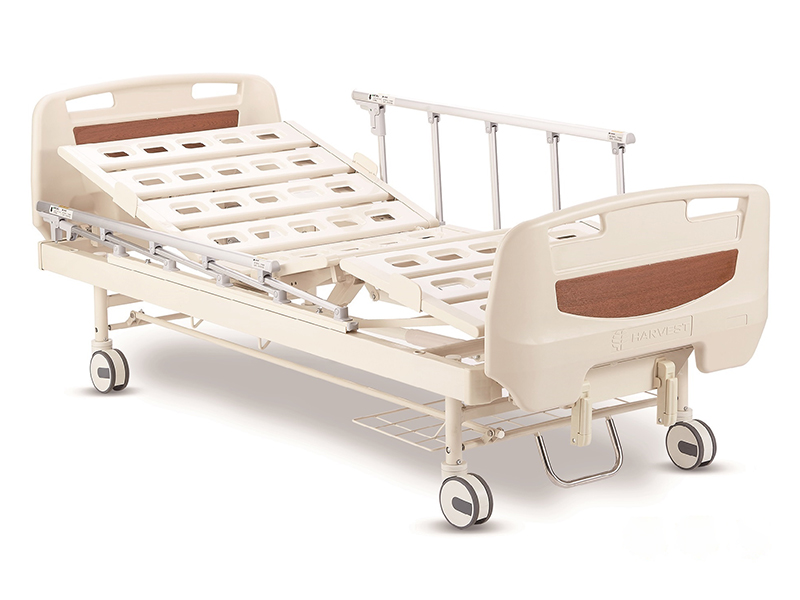
ICARE has maintained ISO 13485:2016 certification since 2008, audited annually by TÜV SÜD. All hospital beds, emergency beds, transfer stretchers, and nursing beds are manufactured under this certified QMS.
Recommended News
-
Hospital lift bed selection and usage scenarios
-
Process analysis and practical skills of ward nursing from admission to rehabilitation
-
Functional characteristics and selection of medical diagnosis and treatment examination bed
-
Rehabilitation bed: the key to improving the quality of care for long-term bedridden patients
-
Smart elderly care technology empowers and opens up a new era of elderly care services
-
Function analysis and selection precautions of electric smart bed
-
Guidelines for selecting rehabilitation equipment and analysis of common types
-
Function analysis and selection skills of companion bed
-
New intelligent and community-based development of home-based elderly care
◇◇ Related Content ◇◇
- What Is An Emergency Bed? Definition, Types, And How To Choose
- Electric Vs Manual Hospital Bed: Which Type Is Right For Your Facility?
- Hospital Bed Buying Guide: How To Choose The Right Medical Bed In 2026
- Comprehensive Analysis Of Emergency Stretchers: Functions, Usage, And Purchasing Guide
- Recommendations For Professional Health Consultation Platforms And Detailed Explanation Of Common Disease Symptoms
- Medical Furniture: A Key Element In Enhancing Healthcare Environment Quality
- Comprehensive Analysis Of Operating Tables: Key Functions, Type Selection, And Core Role In Operating Rooms
- Ultimate Guide To Accompanying Beds: Analysis Of Types, Selection Points, And Future Trends
- Medical Cribs: Safety Standards, Core Features, And Professional Purchasing Guide
◇◇ Related Products ◇◇