News
News
What Is An Emergency Bed? Definition, Types, And How To Choose
What Is an Emergency Bed?
An emergency bed is a specialized mobile patient bed designed for emergency medical care, intra-hospital transport, and short-stay critical care. Unlike standard hospital beds (which prioritize patient comfort for overnight stays), emergency beds prioritize:
Rapid height adjustment via hydraulic or electric systems
Mobility through heavy-duty casters with central braking
Procedural access for resuscitation, imaging, and minor surgery
Imaging compatibility with X-ray, CT, and MRI through transparent boards
Emergency beds are used in emergency rooms (ER), intensive care units (ICU), operating rooms (OR), endoscopy centers, ambulances, and military field hospitals. The term is sometimes used interchangeably with rescue bed, emergency stretcher, or ER stretcher.
Emergency Bed vs Hospital Bed: Key Differences
| Feature | Emergency Bed | Hospital Bed |
|---|---|---|
| Primary purpose | Mobile treatment & transport | Stationary patient care |
| Mobility | High (heavy-duty casters, central brake) | Low (semi-mobile, side rails) |
| Adjustment speed | 5-15 seconds | 15-30 seconds |
| X-ray compatibility | Yes (transparent board) | No |
| CPR quick-release | Yes (premium models) | Manual |
| Typical stay | Hours to days | Days to weeks |
| Patient comfort priority | Medium | High |
| Caregiver access priority | High | Medium |
| Price range (USD) | $1,800 - $4,500 | $250 - $5,000 |
The fundamental difference: emergency beds are designed around caregiver workflow and procedural speed, while hospital beds are designed around patient comfort over multi-day stays.
5 Must-Have Features of an Emergency Bed
1. Hydraulic or Electric Height Adjustment
Height adjustment is the defining feature. Caregivers need to raise the bed for procedures and lower it for patient transfer. Hydraulic systems use foot pedals (hands-free, ideal for sterile procedures), while electric systems use handheld controllers.
ICARE emergency beds use Danfoss hydraulic pumps (Danish brand, industry benchmark) with 200-300 kg lift capacity and 50,000 cycle lifespan.
2. Central Braking System
A central brake locks all four casters simultaneously with one pedal press. This is critical during procedures (CPR, intubation, imaging) where bed drift is dangerous.
Standard casters use individual locks on each wheel - slower and prone to partial locking. Central braking is a non-negotiable feature for emergency departments.
3. X-ray Transparent Board
Premium emergency beds feature carbon fiber or composite boards that are transparent to X-ray, CT, and MRI. This allows imaging without transferring the patient - critical in trauma where movement risks further injury.
ICARE CC-805 and CC-806 use 6mm carbon fiber boards tested for DR, CT, and MRI compatibility up to 3 Tesla.
4. Trendelenburg Positioning
Trendelenburg position (head down, feet up at 15-30 degrees) is essential for:
Shock management (increases venous return)
Some surgical procedures (lower abdominal access)
Certain respiratory therapies
Reverse Trendelenburg (head up) is used for upper abdominal procedures and some respiratory conditions.
5. Load Capacity (200-300 kg)
Standard emergency beds support 200-250 kg. Bariatric emergency beds support 300+ kg. ICARE's CC-806 supports 300 kg with reinforced frame and wider board (1000mm vs standard 840mm).
Bariatric capacity is increasingly important: 15-20% of ER patients in many regions require bariatric accommodation.
Types of Emergency Beds
By Clinical Setting
ER / Emergency Room Stretchers
Used for triage, resuscitation, and short-stay observation. Prioritize mobility, rapid adjustment, and imaging compatibility. Typical stay: 1-6 hours.
ICU Emergency Stretchers
Used for critical care patients requiring frequent imaging or procedures. Combine emergency bed mobility with ICU-grade positioning (lateral turning, CPR release). Typical stay: 1-7 days.
Operating Room Transport Stretchers
Used to transport patients between OR, recovery, and wards. Prioritize smooth transfer and basic positioning. Often paired with OR table for procedures.
Ambulance Stretchers
Mobile units designed for vehicle mounting, with restraint systems for transport safety. Compact folding designs for ambulance interior dimensions.
Endoscopy Stretchers
Specialized for GI procedures, with cut-out sections for colonoscopy access and adjustable height for endoscopist ergonomics.
By Adjustment Mechanism
Manual Emergency Beds
Hand-crank adjustment for height and backrest. Lower cost, no electricity dependency. Best for budget clinics and developing markets.
Hydraulic Emergency Beds
Foot-pedal hydraulic pumps for height adjustment. Hands-free operation ideal for sterile procedures. Mid-range price, most common in modern ERs.
Electric Emergency Beds
Motor-driven adjustment via handheld controller. Fastest adjustment, battery backup. Premium price, used in flagship ERs and hybrid ORs.
ICARE Emergency Bed Models (Comparison)
| Model | Load | Adjustment | X-ray Board | Trendelenburg | CPR Release | Price (USD) |
|---|---|---|---|---|---|---|
| CC-800 | 200 kg | Manual + hydraulic | No | No | No | $1,800+ |
| CC-801 (A/B/C/D) | 250 kg | Full hydraulic | Optional | Yes | No | $2,500 - $3,500 |
| CC-802 | 150 kg | Hydraulic | No | Yes | No | $2,200+ |
| CC-805 | 300 kg | Electric + hydraulic | Yes (carbon fiber) | Yes | Yes | $3,800+ |
| CC-806 | 300 kg | Full electric + hydraulic | Yes (6mm carbon) | Yes (full range) | Yes (3-second) | $4,500+ |
How to Choose the Right Emergency Bed
By Hospital Type
General Hospital ER (50-100 patients/day):
CC-801 series covers 80% of needs
Hydraulic adjustment balances cost and capability
Budget allocation: USD 2,500-3,500 per bed
Trauma Center / Level 1 ER:
CC-805 or CC-806 for resuscitation bays
Carbon fiber X-ray board for rapid imaging
CPR quick-release for cardiac arrest cases
Budget allocation: USD 3,800-4,500 per bed
Pediatric Hospital:
CC-802 with pediatric-specific dimensions
Side rail spacing compliant with pediatric safety standards
Lower load capacity (150 kg) appropriate for children
Ambulance Service:
Mobile stretcher with vehicle mounting system
Restraint belts and IV pole mounts
Compact folding for ambulance interior
Military / Field Hospital:
Durable manual or hydraulic beds
Battery-independent operation preferred
Rugged construction for transport
Frequently Asked Questions
What is an emergency bed used for?
An emergency bed is used for patient transport within hospitals, emergency resuscitation, ICU critical care, and pre-hospital ambulance transport. It combines mobility, rapid adjustment, and imaging compatibility to support emergency medical workflows.
What is the difference between an emergency bed and a hospital bed?
Emergency beds prioritize mobility and rapid procedural access for short stays (hours to days). Hospital beds prioritize patient comfort for multi-day stays. Emergency beds feature hydraulic/electric height adjustment, central braking, and X-ray transparent boards - features absent in standard hospital beds.
What features should I look for in an emergency bed?
Five must-have features: (1) hydraulic or electric height adjustment, (2) central braking system, (3) X-ray transparent board (for imaging compatibility), (4) Trendelenburg positioning, and (5) 200-300 kg load capacity. Premium models add lateral turning and CPR quick-release.
How much does an emergency bed cost?
Emergency bed prices range from USD 1,800 for basic manual-hydraulic models (CC-800) to USD 4,500 for flagship electric-hydraulic models with carbon fiber X-ray boards (CC-806). Bulk pricing offers 15-30% discount for 10+ units.
What is a rescue bed?
A rescue bed is an older term for emergency bed, originally referring to mobile stretchers used in rescue operations (ambulance, military, disaster response). Today, "emergency bed" and "rescue bed" are used interchangeably in clinical contexts.
Can emergency beds be used in ICUs?
Yes. Premium emergency beds (CC-805, CC-806) serve dual purposes - emergency transport and ICU critical care. Their imaging compatibility and rapid adjustment make them ideal for ICU patients requiring frequent procedures. However, dedicated ICU beds (CD-805) offer more comfort for long ICU stays.
Key Takeaways
Emergency bed definition: A mobile treatment bed with hydraulic/electric adjustment, central brake, and imaging compatibility for emergency and critical care settings.
Not the same as a hospital bed: Hospital beds prioritize patient comfort for long stays; emergency beds prioritize mobility, rapid adjustment, and procedural access.
4 core use cases: ER triage and resuscitation, ICU critical care, intra-hospital patient transport, and pre-hospital ambulance transport.
5 must-have features: Hydraulic or electric height adjustment, central braking system, X-ray transparent board, Trendelenburg positioning, 200-300 kg load capacity.
8 ICARE models: From CC-800 (USD 1,800) to CC-806 (USD 4,500) covering basic transport to flagship ICU emergency stretchers.
Pediatric variants exist: CC-802 is sized for children with pediatric-specific side rails and dimensions.
Imaging compatibility: Premium models (CC-805, CC-806) feature carbon fiber boards for DR, CT, and MRI compatibility without patient transfer.
Conclusion
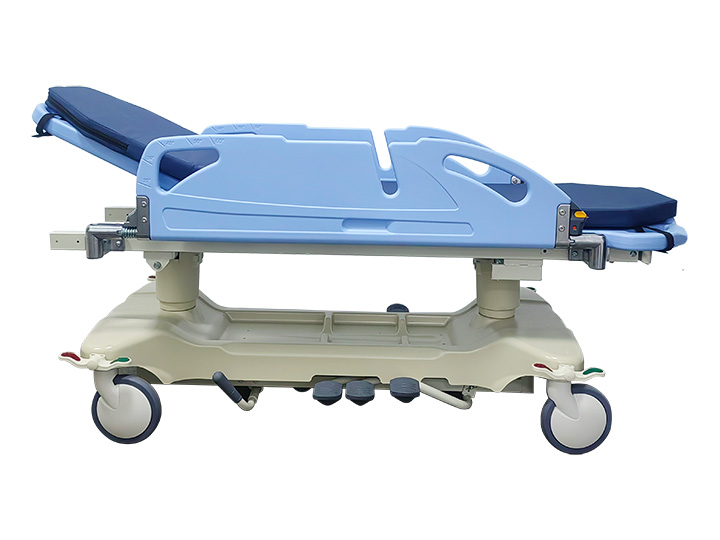
An emergency bed is a mobile, rapidly adjustable patient bed designed for emergency medical care, intra-hospital transport, and short-stay critical care. It differs from a standard hospital bed in prioritizing mobility, procedural speed, and imaging compatibility.
When choosing an emergency bed, match the model to your clinical setting: CC-800 for budget clinics, CC-801 series for general ERs, CC-805/CC-806 for trauma centers and ICUs, and CC-802 for pediatric facilities.
ICARE manufactures 8 emergency bed models under ISO 13485, with options for every clinical need and budget. Browse the complete emergency bed lineup or compare models in detail.
Recommended News
-
Hospital lift bed selection and usage scenarios
-
Process analysis and practical skills of ward nursing from admission to rehabilitation
-
Functional characteristics and selection of medical diagnosis and treatment examination bed
-
Rehabilitation bed: the key to improving the quality of care for long-term bedridden patients
-
Smart elderly care technology empowers and opens up a new era of elderly care services
-
Function analysis and selection precautions of electric smart bed
-
Guidelines for selecting rehabilitation equipment and analysis of common types
-
Function analysis and selection skills of companion bed
-
New intelligent and community-based development of home-based elderly care
◇◇ Related Content ◇◇
- What Is An Emergency Bed? Definition, Types, And How To Choose
- Electric Vs Manual Hospital Bed: Which Type Is Right For Your Facility?
- Hospital Bed Buying Guide: How To Choose The Right Medical Bed In 2026
- Comprehensive Analysis Of Emergency Stretchers: Functions, Usage, And Purchasing Guide
- Recommendations For Professional Health Consultation Platforms And Detailed Explanation Of Common Disease Symptoms
- Medical Furniture: A Key Element In Enhancing Healthcare Environment Quality
- Comprehensive Analysis Of Operating Tables: Key Functions, Type Selection, And Core Role In Operating Rooms
- Ultimate Guide To Accompanying Beds: Analysis Of Types, Selection Points, And Future Trends
- Medical Cribs: Safety Standards, Core Features, And Professional Purchasing Guide