News
News
Functional characteristics and selection of medical diagnosis and treatment examination bed
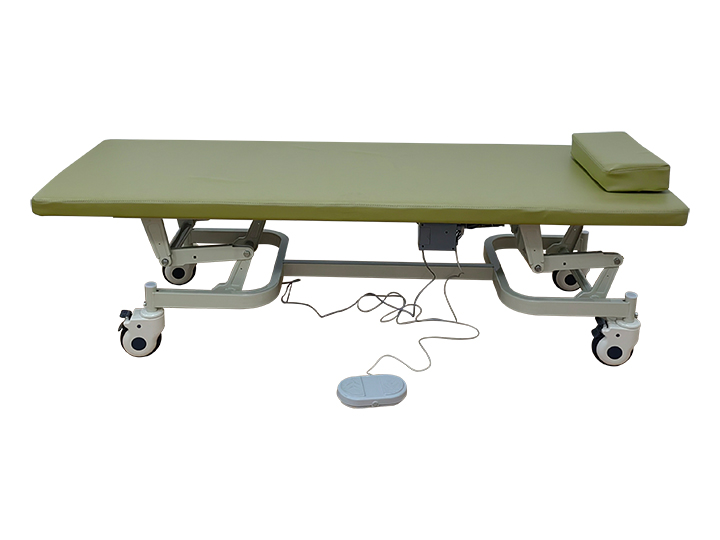
The diagnosis and treatment examination bed, as an indispensable basic equipment in the medical scene, is widely used in disease diagnosis, rehabilitation treatment, clinical nursing and other aspects.The core value of the diagnosis and treatment examination bed is to enhance the experience of both doctors and patients through ergonomic design; — It not only ensures the comfort and safety of patients during examinations, but also creates efficient and convenient operating conditions for medical staff.
Core functions and design features
Modern diagnosis and treatment beds generally adopt modular design and have three core functions:
1. Multi dimensional adjustment system: supports electric/manual adjustment of bed height from 0.6-1.1 meters, the backboard can be tilted 0-85 degrees, and the leg support area is equipped with a range of 0-30 degrees of movement. Some high-end models integrate memory function, which can store commonly used posture parameters.
2. Safety protection devices: including anti fall guardrails, emergency brake buttons, overweight alarm systems (with a load-bearing range of 200-300kg), and 304 stainless steel skeletons coated with antibacterial materials to ensure long-term stability.
3. Scene adaptation and expansion: The gynecological examination bed is equipped with a dedicated stone cutting bracket, the rehabilitation treatment bed is equipped with a traction fixing belt, and the imaging examination bed is equipped with a radiation penetration enhanced bed plate. Some models are equipped with auxiliary components such as infusion rack slots and instrument trays.
Mainstream types and application scenarios
According to differences in clinical needs, medical examination beds can be divided into four categories:
-Basic diagnosis and treatment type: suitable for routine outpatient examinations, equipped with three-stage manual adjustment, commonly used for basic medical operations such as blood pressure measurement and wound treatment.
-Specialized customized type: For example, the gynecological examination bed is equipped with a detachable foot rest, and the ophthalmic diagnosis and treatment bed integrates a head fixed bracket to meet the special positioning requirements of specific departments.
-Intelligent electric type: One click position switching is achieved through the control panel, equipped with pressure sensors for real-time monitoring of patient posture, especially suitable for intensive care and postoperative observation scenarios.
-Mobile emergency type: It adopts a lightweight aluminum alloy frame, with a thickness of only 20cm after folding, supporting rapid deployment and widely used in mobile medical scenarios such as emergency transportation and community clinics.
Key indicators for equipment selection
When purchasing medical institutions, the following factors should be considered:
1. Clinical compatibility: Gastroenterology department should prioritize models with gastrointestinal decompression devices, orthopedics should be equipped with hard compression resistant bed boards, and pediatrics should choose child friendly designs with cartoon patterns.
2. Space adaptability: Small community clinics should choose compact beds with a width of 60-70cm, while operating rooms in tertiary hospitals can be equipped with full-size beds over 2.2 meters in length.
3. Cost control for operation and maintenance: For electric motor models, the lifespan of the motor (usually 5-8 years) and maintenance response speed should be evaluated, while for manual models, the durability of the hydraulic rod should be emphasized.
4. Operating standards and maintenance points
Standardized procedures should be followed in daily use:
-Confirm the patient's position stability before each adjustment, and regularly calibrate the lifting speed of the electric model (recommended 4cm/s)
-Check the lubrication level of joint connections every week, conduct load-bearing tests every month, and immediately shut down for maintenance if any abnormal noise is found
-When using chlorine containing disinfectants for cleaning, it is necessary to avoid precision components such as the motor compartment to prevent liquids from infiltrating the circuit system
With the development of medical technology, new diagnosis and treatment beds are upgrading towards intelligence. Some products have integrated physical sign monitoring modules, which can transmit real-time data such as heart rate and blood oxygen to medical information systems. It is recommended that medical institutions choose future products with IoT access capabilities when updating equipment, taking into account the digital hospital construction plan.
Recommended News
-
Hospital lift bed selection and usage scenarios
-
Process analysis and practical skills of ward nursing from admission to rehabilitation
-
Functional characteristics and selection of medical diagnosis and treatment examination bed
-
Rehabilitation bed: the key to improving the quality of care for long-term bedridden patients
-
Smart elderly care technology empowers and opens up a new era of elderly care services
-
Function analysis and selection precautions of electric smart bed
-
Guidelines for selecting rehabilitation equipment and analysis of common types
-
Function analysis and selection skills of companion bed
-
New intelligent and community-based development of home-based elderly care
◇◇ Related Content ◇◇
- How Do I Verify The Hospital Bed Factory Before Ordering?
- How Do I Compete With Direct Manufacturer Sales As A Hospital Bed Distributor?
- How Do I Verify The Factory Is Real Before Ordering Hospital Beds?
- What Documents Are Required For Hospital Bed Government Tenders?
- Hospital Bed Government Tender For 200 Beds (Full Guide)
- How Much Does OEM Mold Setup Cost For Hospital Beds?
- Emergency Hospital Bed Order: What "30-Day Delivery" Really Means
- How Long Does OEM Hospital Bed Production Take?
- Hospital Bed Spare Parts Planning: What To Stock For A 50-Bed Fleet