News
News
Surgical Operating Table: A Practical Guide For OR Procurement
Selecting a surgical operating table is one of the highest-stakes equipment decisions a hospital makes. Unlike beds or chairs that can be swapped out if a patient complains, the operating table sits at the center of every procedure — and its specifications directly affect surgical access, imaging quality, and patient safety.
ICARE has been manufacturing and supplying surgical operating tables to hospitals worldwide. This guide covers the technical specifications that matter, the decisions procurement committees need to make, and the practical details that don't always appear on the product brochure.
Types of Surgical Operating Tables
The market breaks down into three main categories, each suited to different surgical workflows and budget levels.
Electric Hydraulic Operating Tables
The current gold standard for general and specialty surgery. These tables use an electro-hydraulic power unit to adjust height, tilt, and position at the touch of a button. The hydraulic system provides smooth, vibration-free movement and can support heavy loads without manual cranking.
Advantages:
• Single-button position changes — the surgeon controls the table without interrupting the procedure
• Smooth, stepless adjustment across the full range of motion
• High load capacity (typically 200–250 kg)
• Memory position presets for recurring procedures
Best for:
• General surgery ORs
• Gynecology and urology suites
• Multi-specialty operating rooms where table configuration changes between cases
Mechanical (Manual) Operating Tables
Crank-operated tables that use hand wheels and gear mechanisms for position adjustment. Less expensive than hydraulic models, they remain common in resource-constrained settings and single-procedure ORs where the table position rarely changes mid-surgery.
Advantages:
• Lower purchase price (typically 40–60% less than hydraulic)
• No electrical or hydraulic components to maintain
• Reliable in settings with unstable power supply
• Simpler repair — most issues can be resolved by on-site biomedical technicians
Best for:
• Smaller hospitals and surgical centers
• Settings where budget is the primary constraint
• Single-procedure ORs (e.g., dedicated ophthalmology or ENT rooms)
Orthopedic-Specific Operating Tables
Purpose-built for fracture reduction, joint replacement, and spinal surgery. These tables include integrated traction systems, radiolucent sections for intraoperative imaging, and modular accessory attachment points.
Key features that distinguish orthopedic tables:
• Built-in fracture traction frame with adjustable pull
• Radiolucent tabletop sections that allow full-length C-arm imaging without repositioning the patient
• Perineal post for leg positioning
• Extended Trendelenburg and reverse Trendelenburg range
ICARE offers both general-purpose hydraulic tables and orthopedic-specific models, each designed to support the specific demands of their surgical use case.
Core Technical Specifications
When comparing surgical tables, these are the parameters that determine whether a table fits your OR and your procedures.
Tabletop Dimensions
• Length: Standard surgical tables are 1,900–2,100 mm long. Extended models reach 2,200–2,300 mm for bariatric patients.
• Width: 480–520 mm is standard. Wider tops (550 mm) improve patient stability but may interfere with surgeon positioning in tight spaces.
• Usable length after accounting for head/foot sections: Many tables have detachable or folding extensions that reduce the flat surface area. Confirm the usable dimensions with all extensions in the surgical position.
Height Range
This parameter determines whether the table works for both standing and seated surgical positions.
• Minimum height: 600–700 mm from floor to tabletop. Lower is better for procedures performed in a seated position (ophthalmology, ENT, microsurgery).
• Maximum height: 900–1,050 mm from floor. Higher is better for standing surgeons and procedures requiring leg drainage.
• Adjustment range: A 400+ mm vertical travel range covers most surgical scenarios.
ICARE hydraulic tables offer a 650–1,050 mm height range (350 mm travel), accommodating both seated microsurgery and standing general surgery.
Load Capacity
Patient weight trends upward globally. A table rated for 200 kg covers the majority of cases, but hospitals serving populations with high obesity rates should specify 250 kg or higher.
Load capacity must account for:
• Patient weight
• Surgical drapes and positioning devices (adds 5–15 kg)
• Surgeons who may lean on the table during the procedure
• Imaging cassettes or equipment placed on the tabletop
Trendelenburg and Reverse Trendelenburg
The ability to tilt the entire table head-down (Trendelenburg) or head-up (reverse Trendelenburg) is essential for:
• Abdominal surgery: Trendelenburg position shifts viscera away from the surgical field
• Gynecology: Steep Trendelenburg (20°–30°) improves pelvic exposure
• Cardiovascular surgery: Reverse Trendelenburg aids venous drainage
• Emergency hemorrhage control: Trendelenburg was historically used for shock management (though current evidence is mixed)
Standard range: ±20° to ±30°. Steep Trendelenburg capability (up to 40°) is available on specialized models and requires anti-slip mattress surfaces and patient securing systems.
Radiolucent Tabletop Technology
Modern surgery increasingly relies on intraoperative imaging — C-arm fluoroscopy, portable X-ray, and intraoperative CT. The tabletop must allow X-ray transmission without significant image degradation.
Radiolucent materials used in surgical tables:
• Carbon fiber composite: The current standard. Offers excellent X-ray transmission (attenuation < 5% at typical kVp settings), high structural strength, and low weight. Carbon fiber tabletops are standard on mid-to-high-end surgical tables.
• Radiolucent polymer sections: Some tables have discrete radiolucent zones (typically over the chest and pelvis) rather than a full carbon fiber top. More affordable but limits imaging flexibility.
• Removable radiolucent sections: Modular tabletops with removable segments that can be swapped for radiolucent panels when imaging is needed and replaced with solid sections for structural support.
ICARE surgical tables feature full-length carbon fiber tabletop sections with < 3% X-ray attenuation, compatible with C-arm, portable X-ray, and intraoperative CT systems.
Position Management During Surgery
Surgical tables provide several independent axes of movement. Understanding the full range helps OR managers select tables that match their procedure mix.
Height Adjustment (Vertical Travel)
Already covered above. Controlled by foot pedal or hand switch on hydraulic models.
Back Section Tilt
The head/torso section of the tabletop tilts independently from 0° to ±75°. Used for:
• Sitting position for neurosurgery (up to 90° on some models)
• Beach chair position for shoulder surgery (60°–80°)
• Fowler's position for upper abdominal surgery (30°–45°)
Leg Section Articulation
Leg sections drop down independently or together. Range varies from 0° to 90°+ down. Critical for:
• Lithotomy position (gynecology, urology, colorectal)
• Knee arthroscopy positioning
• Vascular access procedures
Lateral Tilt
The entire tabletop tilts side-to-side, typically ±20°. Used for:
• Lateral decubitus positioning without full table rotation
• Kidney surgery (elevating the operative side)
• Thoracic surgery access
Table Translation (Longitudinal Slide)
Some hydraulic tables allow the tabletop to slide longitudinally along the base, providing up to 300 mm of travel. This feature lets the surgeon reposition the patient relative to fixed equipment (C-arm, microscope, navigation system) without moving the entire table base.
Orthopedic Traction Frame Compatibility
For fracture reduction and hip/knee procedures, the operating table must interface with a traction frame. Key compatibility factors:
• Mounting interface: Most traction frames attach to the side rail of the table (standard 25 mm × 25 mm rail profile). Confirm the rail profile matches your existing traction equipment.
• Traction force capacity: Standard frames deliver 30–50 kg of pull. Complex fracture reduction may require higher capacity.
• Fracture table add-ons: Some orthopedic tables are modular — the base table serves general surgery, and a traction frame module attaches for orthopedic days. This dual-use approach reduces capital cost for hospitals with limited OR space.
ICARE orthopedic tables feature standard side rails compatible with major traction frame brands, and the ICARE-OT200 series includes a quick-connect traction frame that attaches in under 3 minutes.
Integration with OR Equipment
A surgical table doesn't operate in isolation. It must coexist with the surgical light, electrosurgical unit, anesthesia machine, and patient monitoring system.
Surgical Light Compatibility
The table base design affects how close the surgical light can get to the patient. Five-column bases offer more legroom and better light access than pedestal bases. ICARE tables use a five-column design with a minimal-diameter base (700 mm × 700 mm footprint) that allows the surgical light to reach a 30° angle from vertical without obstruction.
Electrosurgical Unit Grounding
Many surgical tables include an equipotential grounding point for connecting the electrosurgical unit's patient return electrode cable. This ensures the patient, table, and ESU are at the same electrical potential, reducing the risk of alternate site burns.
Anesthesia Screen Attachment
Anesthesia screens (IV poles, monitor mounts) often attach to the table's side rail. Confirm that the rail has sufficient length and load rating to support the additional equipment without flexing.
Patient Monitoring Cable Management
Tables with cable management channels or integrated cable hooks prevent monitoring cables from tangling when the table moves. This is a small but meaningful quality-of-life improvement for OR nurses.
ICARE Surgical Table Product Line
ICARE (Wuxi Icare Medical Technology Co., Ltd.) manufactures surgical operating tables under ISO 13485 quality management:
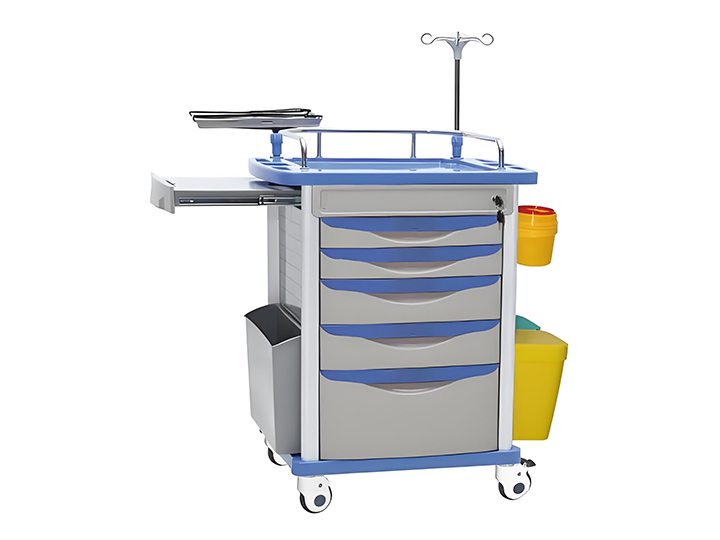
• ICARE-OT100 Series: Electric hydraulic general surgery table with carbon fiber tabletop, full Trendelenburg/reverse Trendelenburg, and 350 mm height travel. The standard model for multi-specialty ORs.
• ICARE-OT200 Series: Orthopedic surgical table with integrated quick-connect traction frame, full-length radiolucent tabletop, and perineal post. Purpose-built for trauma and joint replacement surgery.
• ICARE-OT300 Series: Bariatric surgical table rated for 300 kg patient load, with extended tabletop dimensions (2,200 mm × 550 mm) and reinforced hydraulic system.
• ICARE-OT400 Series: Compact hydraulic table for ophthalmology, ENT, and minor surgery suites. Lower minimum height (600 mm) and simplified controls for single-procedure efficiency.
All ICARE surgical tables are tested per ISO 7194 (surgical tables) and carry CE marking for international markets. Our 5,000㎡ ISO-certified factory provides full OEM/ODM support and global after-sales service for hospital clients.
Recommended News
-
Hospital lift bed selection and usage scenarios
-
Process analysis and practical skills of ward nursing from admission to rehabilitation
-
Functional characteristics and selection of medical diagnosis and treatment examination bed
-
Rehabilitation bed: the key to improving the quality of care for long-term bedridden patients
-
Smart elderly care technology empowers and opens up a new era of elderly care services
-
Function analysis and selection precautions of electric smart bed
-
Guidelines for selecting rehabilitation equipment and analysis of common types
-
Function analysis and selection skills of companion bed
-
New intelligent and community-based development of home-based elderly care
◇◇ Related Content ◇◇
- How Do I Verify The Hospital Bed Factory Before Ordering?
- How Do I Compete With Direct Manufacturer Sales As A Hospital Bed Distributor?
- How Do I Verify The Factory Is Real Before Ordering Hospital Beds?
- What Documents Are Required For Hospital Bed Government Tenders?
- Hospital Bed Government Tender For 200 Beds (Full Guide)
- How Much Does OEM Mold Setup Cost For Hospital Beds?
- Emergency Hospital Bed Order: What "30-Day Delivery" Really Means
- How Long Does OEM Hospital Bed Production Take?
- Hospital Bed Spare Parts Planning: What To Stock For A 50-Bed Fleet