News
News
Infusion Chair Vs Waiting Chair: What Hospital Administrators Need To Know
Patients receiving IV therapy don't just need a place to sit — they need a seat engineered for extended immobility, arm positioning, and quick emergency response. That's the gap between a standard waiting room chair and a purpose-built infusion chair.
At ICARE, we manufacture both product categories, and hospital procurement teams frequently ask us the same question: can we just buy one type for all seating areas? The short answer is no. The longer answer explains why infusion chairs exist as a distinct product class — and what specifications actually matter when selecting them.
What Is an Infusion Chair?
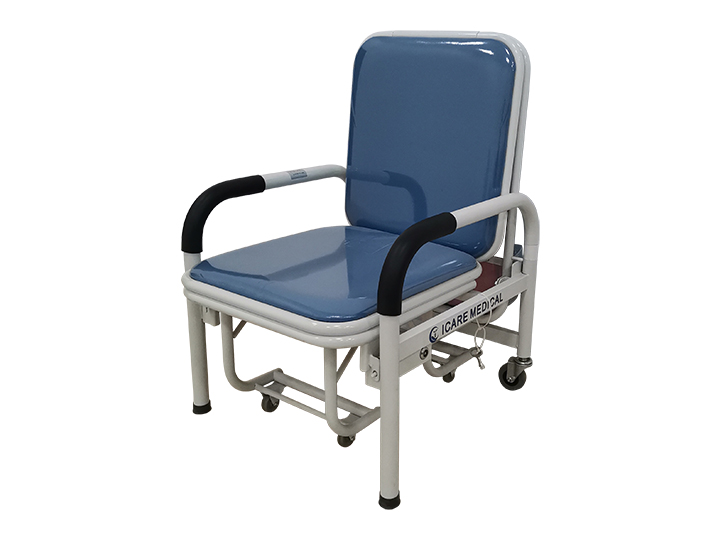
An infusion chair (also called an IV chair, infusion recliner, or chemotherapy chair) is a medical seating unit designed for patients receiving intravenous therapy. Unlike a standard waiting chair, it features adjustable recline, integrated IV pole mounting points, and extended sitting surfaces that accommodate 1-to-4-hour treatment sessions.
Infusion chairs are standard equipment in:
• Outpatient infusion centers
• Dialysis units
• Chemotherapy and oncology day wards
• Emergency observation areas
• Blood donation centers
Infusion Chair vs Waiting Chair: The Key Differences
| Feature | Waiting Room Chair | Infusion Chair |
| Typical sit duration | 15–60 minutes | 1–4 hours |
| Recline capability | None (upright only) | 0°–60° recline range |
| IV pole mount | No | Yes (built-in socket or rail) |
| Footrest | Fixed or none | Adjustable/retractable |
| Side arm clearance | Standard | Wide-open for IV arm access |
| Weight capacity | 120–135 kg | 150–180 kg |
| Trendelenburg position | No | Limited (some models) |
The fundamental difference is time. A waiting chair needs to be comfortable for 30 minutes. An infusion chair needs to keep a patient stable, comfortable, and safe for hours — during which they may be receiving medications that cause drowsiness, nausea, or blood pressure changes.
Core Features of a Quality Infusion Chair
Adjustable Recline Angle
The backrest on an infusion chair adjusts from upright (approximately 95°) to a semi-reclined position (up to 150°–160° from the seat pan). This range serves multiple clinical purposes:
• Upright position: For short infusions, patient check-in, and conversation with nursing staff.
• Semi-reclined position (120°–140°): Reduces pressure on the lower back during long sessions. Also useful for patients experiencing nausea, as the elevated torso position helps manage discomfort.
• Near-flat position (150°–160°): For patients who become drowsy or hypotensive during treatment. Provides a resting position that still allows nursing staff to access the IV site.
ICARE infusion chairs use a gas-spring-assisted recline mechanism that lets patients adjust their own position with minimal effort. The mechanism locks at any point within the range, preventing unwanted movement when the patient shifts weight.
Integrated IV Pole Interface
Every infusion chair needs a reliable mounting point for the IV pole. The two common approaches:
1. Fixed socket mount: A steel sleeve welded to the chair frame, accepting a standard 25 mm diameter IV pole. Simple, durable, and low-profile.
2. Sliding rail mount: A horizontal rail on the chair arm or back frame that allows the IV pole to be repositioned along the rail. Provides flexibility for left-arm or right-arm IV access.
ICARE offers both configurations. The rail mount option is preferred in oncology wards where nurses need to switch IV arm access between treatment cycles.
Adjustable Footrest
A retractable or fold-down footrest reduces pressure on the back of the thighs during extended sitting. For patients with lower extremity edema (common in dialysis and heart failure patients), the footrest also allows slight leg elevation to reduce swelling.
The footrest should adjust independently of the recline angle and lock securely in position. ICARE footrests support up to 50 kg of load without deflection.
Side Guards and Anti-Slip Design
Patients receiving sedating medications or experiencing dizziness need lateral support. Quality infusion chairs include:
• Flip-down side arms that can be raised to prevent falls during sleep
• Non-slip seat surfaces that maintain grip even when the backrest is reclined
• Anti-tip base design with a wider footprint at the rear to prevent backward tipping when the chair is fully reclined
ICARE infusion chairs feature a 4-leg base with rear stabilizer bars. The chair passes the 10° rearward tilt stability test per EN 16139.
Seat Materials: Waterproofing Is Non-Negotiable
Infusion chairs deal with bodily fluids more than any other hospital furniture category. IV site bleeding, medication spills, patient perspiration, and occasional incontinence all make waterproof, chemical-resistant upholstery essential.
The top material choices:
• Medical-grade PU leather: The standard for infusion chairs. Impermeable, wipe-clean, and resistant to alcohol-based disinfectants. Quality PU leather lasts 5–8 years in daily infusion center use.
• PVC-coated fabric: A step down in comfort but extremely chemical-resistant. Suitable for high-turnover infusion centers where cleaning between patients happens in under 5 minutes.
• Antimicrobial-treated textiles: Emerging technology with silver-ion or copper-infused surface treatments. These reduce microbial load between cleaning cycles but still require full disinfection between patients.
ICARE uses medical-grade PU leather with heat-sealed seams across the full infusion chair line. The heat-sealed construction eliminates needle holes where fluids can penetrate and harbor bacteria.
Calculating Daily Throughput
Infusion chairs generate revenue based on patient turnover. A typical outpatient infusion chair can process 3–4 patients per 8-hour shift, depending on treatment duration.
Here's a simplified throughput calculation for a hospital planning their infusion center:
• Average treatment time: 2 hours
• Turnover time between patients (cleaning + setup): 15 minutes
• Effective chairs needed for 40 patients/day: 40 × (2 + 0.25) ÷ 8 = 11.25, so 12 chairs minimum
Space planning should account for chair spacing (minimum 1.2 meters center-to-center for nursing access), IV pole clearance, and emergency egress routes. ICARE provides free space planning consultations for hospitals specifying 6 or more infusion chairs.
Use Case Scenarios
Outpatient Infusion Centers
High patient turnover demands durability and fast cleaning. Specify PVC-coated or PU leather with minimal seams. Gas-spring recline is preferred over manual ratchet mechanisms for faster position adjustment between patients.
Dialysis Units
Sessions run 3–5 hours. Patient comfort during extended treatment is critical. Look for chairs with wider seats (minimum 500 mm), thick foam cushioning (minimum 60 mm), and Trendelenburg-capable recline for patients experiencing hypotension during dialysis.
Chemotherapy Wards
Treatment sessions vary widely — 30 minutes to 6 hours. The chair needs to accommodate the full range. Privacy is also a factor; some chemotherapy patients prefer chairs with higher backrests and side panels for visual separation from neighboring patients. ICARE offers optional privacy panels for this application.
Emergency Observation
Infusion chairs in emergency departments need to handle unpredictable patient acuity. Choose models with wider recline range (up to near-flat), integrated side rails, and compatibility with standard hospital stretcher mattress covers for rapid decontamination.
Maintenance and Lifecycle Costs
An infusion chair is a capital asset with a typical 7–10 year service life. Maintenance costs break down as follows:
• Annual mechanical inspection: Check recline mechanism, gas spring, and locking systems. Replace gas springs every 3–5 years depending on usage intensity.
• Upholstery replacement: PU leather typically needs replacement at year 5–7, depending on cleaning chemical exposure and patient volume.
• IV pole socket wear: Inspect for loosening annually. Rail-mount systems may need track lubrication every 6 months.
• Structural weld inspection: Every 3 years for chairs in 24/7 emergency departments.
ICARE provides maintenance schedules with each chair purchase and supplies replacement parts (gas springs, upholstery kits, footrest assemblies) for a minimum of 10 years after the production date.
Patient Safety During Infusion Therapy
Safety extends beyond mechanical stability. When patients sit for hours receiving IV medications, several clinical risks must be addressed through chair design:
• Pressure ulcer prevention: Prolonged immobility increases pressure ulcer risk, especially for elderly and malnourished patients. Seat cushions should use high-resilience foam (density ≥35 kg/m³) that distributes pressure evenly across the seating surface. Memory foam, while comfortable, can create a "hammock effect" that concentrates pressure on the sacrum — avoid it for infusion applications.
• IV line management: Tubing should run from the IV pole to the patient's arm without crossing under the seat or through sharp bends. Chairs with open armrest designs allow IV lines to drape naturally, reducing kinking and infiltration risk.
• Emergency positioning: If a patient experiences anaphylaxis or cardiac arrest during infusion, the chair must recline to a flat position within seconds. Hydraulic systems with single-lever emergency release outperform manual ratchet systems in these scenarios.
• Patient call systems: Some infusion chairs integrate call buttons on the armrest within easy reach. This is particularly important for patients who may be too weak to call for help verbally.
ICARE Infusion Chair Product Line
ICARE (Wuxi Icare Medical Technology Co., Ltd.) manufactures a dedicated infusion chair series under ISO 13485 quality management:
• ICARE-IC100 Series: Standard infusion recliner with gas-spring mechanism, PU leather upholstery, and fixed IV pole socket. The best-selling model for general outpatient infusion centers.
• ICARE-IC200 Series: Premium dialysis chair with extended recline range (up to 165°), wider seat pan (520 mm), and integrated side rails. Designed for 4+ hour treatment sessions.
• ICARE-IC300 Series: Oncology infusion chair with optional privacy panels, sliding rail IV mount, and antimicrobial-treated upholstery.
• ICARE-IC400 Series: Emergency department infusion/observation chair with near-flat recline, removable side arms, and full stretcher-compatible dimensions.
All ICARE infusion chairs are tested to EN 16139 for structural integrity and load-bearing performance. Our 5,000㎡ ISO-certified factory supports OEM/ODM customization for international hospital clients.
Recommended News
-
Hospital lift bed selection and usage scenarios
-
Process analysis and practical skills of ward nursing from admission to rehabilitation
-
Functional characteristics and selection of medical diagnosis and treatment examination bed
-
Rehabilitation bed: the key to improving the quality of care for long-term bedridden patients
-
Smart elderly care technology empowers and opens up a new era of elderly care services
-
Function analysis and selection precautions of electric smart bed
-
Guidelines for selecting rehabilitation equipment and analysis of common types
-
Function analysis and selection skills of companion bed
-
New intelligent and community-based development of home-based elderly care
◇◇ Related Content ◇◇
- How Do I Verify The Hospital Bed Factory Before Ordering?
- How Do I Compete With Direct Manufacturer Sales As A Hospital Bed Distributor?
- How Do I Verify The Factory Is Real Before Ordering Hospital Beds?
- What Documents Are Required For Hospital Bed Government Tenders?
- Hospital Bed Government Tender For 200 Beds (Full Guide)
- How Much Does OEM Mold Setup Cost For Hospital Beds?
- Emergency Hospital Bed Order: What "30-Day Delivery" Really Means
- How Long Does OEM Hospital Bed Production Take?
- Hospital Bed Spare Parts Planning: What To Stock For A 50-Bed Fleet