News
News
Medicine Preparation Tables: Design, Cleanroom Standards, And Hospital Procurement
The Role of Medicine Preparation Tables in Patient Safety
A medicine preparation table — sometimes called a drug preparation station or pharmacy compounding table — is a dedicated work surface used by nurses and pharmacists for IV admixture, oral medication reconstitution, and unit-dose preparation. These tables are positioned in medication rooms, pharmacy cleanrooms, and satellite prep areas throughout the hospital.
The design of a medicine preparation table directly affects medication error rates, aseptic technique compliance, and the efficiency of the drug preparation workflow. For facility managers and pharmacy directors, specifying the right preparation table means balancing cleanroom classification requirements, ergonomic demands, and budget constraints.
ICARE supplies medicine preparation tables and associated cleanroom furniture to hospitals globally, with designs that meet ISO 14644 cleanroom standards and ISO 13485 manufacturing requirements.
Primary Functions: IV Admixture vs. Oral Preparation
Intravenous (IV) Drug Preparation
IV admixture is the most contamination-sensitive medication preparation task. It requires a laminar airflow environment — typically a biological safety cabinet (BSC) or a compounding aseptic containment isolator (CACI) — with the preparation table serving as the primary work surface inside the controlled zone.
Key requirements for IV preparation surfaces:
• Non-shedding, non-particulate-generating materials
• Chemical resistance to alcohol, isopropanol, and cytotoxic drug spills
• Flush-mounted edges to prevent liquid pooling
• Compatibility with HEPA-filtered airflow patterns (no turbulence-inducing edges or raised lips)
Oral Drug Preparation
Oral medication reconstitution and unit-dose packaging occur in lower-classification environments — typically ISO Class 8 (Grade D) cleanrooms or standard medication rooms. The preparation table here prioritizes surface cleanability, drawer storage for organized access, and integration with automated dispensing systems.
Cleanroom Classification and Table Placement
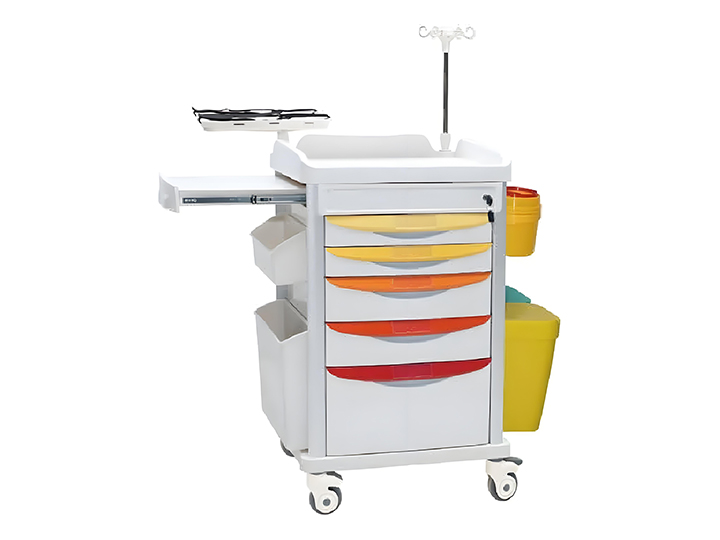
Medicine preparation tables must be positioned within appropriately classified environments. The table itself doesn't need to be "cleanroom certified," but its materials and construction must not compromise the room's air quality.
| Cleanroom Class | Typical Use | Table Material Requirement |
| ISO Class 5 (Grade A) | IV compounding, cytotoxic prep | 304 stainless steel, seamless, electro-polished |
| ISO Class 7 (Grade C) | Aseptic support areas | 304 stainless steel or epoxy-coated steel |
| ISO Class 8 (Grade D) | Oral prep, unit-dose packaging | 304 stainless steel or high-grade ABS |
| Unclassified | General medication rooms | ABS or powder-coated steel acceptable |
ICARE manufactures preparation tables in all four material configurations, with frame designs optimized for each classification level. Our ISO Class 5-rated tables use mirror-finish 304 stainless steel with welded, ground, and polished joints to eliminate particulate traps.
Surface Materials: 304 Stainless Steel vs. Epoxy Coating
304 Stainless Steel
The pharmaceutical industry standard for aseptic preparation surfaces. 304 stainless steel offers:
• Superior chemical resistance to alcohols, peroxides, and cytotoxic agents
• Non-porous surface that prevents microbial colonization
• Electro-polished finishes (Ra ≤ 0.4 µm) that reduce particle adhesion
• Long service life with minimal maintenance
The cost premium over coated alternatives is justified in any area classified ISO 5 or ISO 7.
Epoxy-Coated Steel
A cost-effective option for general medication rooms and oral preparation areas. Epoxy coatings provide:
• Smooth, wipeable surface suitable for non-aseptic tasks
• Color coding options (green for clean areas, blue for support areas)
• Lower initial cost per unit
Epoxy coatings degrade over time with aggressive disinfectant use — typically showing wear at edges and corners within 2–3 years in high-use environments. Facilities using coated tables should plan for resurfacing or replacement cycles.
Ergonomic Design for Pharmacy and Nursing Staff
Medication preparation involves repetitive motions — reaching, pouring, labeling, and document handling — often performed over 8-hour shifts. Poor table ergonomics contribute to musculoskeletal disorders among pharmacy technicians and nurses.
Design features that reduce occupational strain:
• Height adjustability: electric or gas-spring mechanisms allowing 750–950 mm adjustment range
• Knee clearance: open under-table design with no cross-braces obstructing leg position
• Edge profile: rounded or waterfall edges prevent forearm pressure points
• Tilt capability: slight surface tilt (5–10°) toward the operator reduces neck flexion during document review
• Accessory positioning: supply holders and waste bins within the primary reach envelope (300–500 mm from the operator's seated position)
ICARE preparation tables incorporate these ergonomic principles across all models, with adjustable-height options available in both stainless steel and coated configurations.
Workflow Optimization Through Zoning
Efficient drug preparation depends on unidirectional workflow — materials enter from one side, prepared doses exit from the other. Medicine preparation tables support this through intentional zoning:
Supply Zone (upstream side)
Drawer units and shelf racks hold unopened vials, syringes, and diluent bags. Positioned on the operator's non-dominant side for single-hand access during aseptic technique.
Work Zone (center)
The primary preparation surface — clear, unobstructed, and sized for the specific task. IV compounding zones typically require a minimum 600 × 600 mm clear surface; oral prep tables can be smaller.
Documentation Zone (downstream side)
Space for labels, scanners, and documentation. Separated from the work zone to prevent cross-contamination between prepared doses and administrative tasks.
Waste Zone (below surface)
Foot-operated waste containers positioned beneath the work surface for sharps and packaging waste. Hands-free operation maintains aseptic technique.
ICARE preparation tables are designed with these workflow zones in mind, offering configurable drawer and shelf arrangements that support unidirectional material flow.
Medicine Preparation Tables vs. Medicine Preparation Cabinets
A common procurement question: do you need a table or a cabinet?
Medicine preparation tables are open work surfaces with optional under-counter storage. They're used when the preparation task requires full arm mobility and visibility — typical in hospital pharmacy cleanrooms and medication rooms.
Medicine preparation cabinets are enclosed units with pass-through boxes and integrated HEPA filtration. They're used when the task requires a controlled environment that a table alone cannot provide — such as cytotoxic drug preparation or sterile compounding in non-classified rooms.
Most hospitals use both: cabinets for high-risk aseptic compounding, and tables for oral preparation, reconstitution, and label verification. ICARE manufactures both product lines with consistent design language and shared accessory compatibility.
Infection Prevention and Control Considerations
Hospital-acquired infections linked to medication preparation errors remain a significant patient safety concern. The preparation table's role in infection prevention extends beyond surface material:
• Seamless construction: welded joints with no crevices prevent microbial harborage
• Coved edges: where the table surface meets walls or legs, coving eliminates 90-degree corners that trap debris
• Caster design: locked casters with smooth hubs prevent dust accumulation and allow thorough cleaning
• No hollow tubing: sealed tube ends prevent internal condensation and microbial growth
ICARE manufacturing processes follow ISO 13485 standards with full traceability. Every preparation table ships with a certificate of conformity and material test reports.
Staffing and Workflow Impact
The choice of medicine preparation table affects more than physical workflow — it influences staffing patterns and labor allocation. Tables with integrated storage and organized accessory placement reduce the time pharmacists and nurses spend searching for supplies during preparation tasks. Operations research in hospital pharmacy consistently shows that well-organized work surfaces reduce preparation time per dose by 10–15%, a significant margin when a pharmacy processes hundreds of doses per shift.
Tables positioned to support unidirectional workflow also reduce the risk of preparation errors caused by cross-contamination between clean supplies and finished products. This principle is built into every ICARE preparation table design, with configurable zone layouts matching the specific preparation tasks of each department.
Emerging Trends: Smart Preparation Stations
The pharmacy automation market is moving toward integrated smart preparation stations that combine the preparation table surface with:
• Barcode scanning and verification systems
• Automated label printers integrated into the table surface
• Weight sensors that detect dosing errors in real time
• RFID tracking of drug vials and prepared doses
• Touch-screen interfaces for order review and documentation
While full smart stations remain a premium investment, ICARE designs its preparation tables to accommodate these integrations — with pre-drilled mounting points, cable management channels, and power pass-throughs built into the frame.
Procurement Specifications: What to Request from Suppliers
When sourcing medicine preparation tables, hospital procurement teams should specify:
• Surface material grade (304 stainless steel minimum for aseptic areas)
• Cleanroom compatibility classification
• Load capacity (typically 100–150 kg for table surfaces)
• Height adjustment range and mechanism type
• Accessory compatibility (drawers, shelves, waste bins, IV pole mounts)
• Supplier ISO 13485 certification status
• Material traceability documentation
• Warranty terms and availability of replacement parts
ICARE provides complete specification packages with every quotation, including CAD drawings, material certificates, and cleanroom compatibility declarations.
ICARE Medicine Preparation Table Solutions
ICARE (Wuxi icare Medical Technology Co., Ltd.) manufactures medicine preparation tables and cleanroom furniture for hospital pharmacy and nursing environments. Our product range includes:
• ISO Class 5-rated stainless steel preparation tables for IV compounding
• ISO Class 7–8 preparation tables for aseptic support areas
• General medication room tables with epoxy-coated or ABS surfaces
• Configurable drawer and shelf accessory systems
• Smart-ready table designs with integrated cable and power management
Our 5,000 ㎡ ISO 13485-certified facility in Wuxi, China, produces tables to international cleanroom standards. With a team of 55+ professionals and export experience to hospitals in over 40 countries, ICARE delivers preparation tables that meet the regulatory, ergonomic, and workflow demands of modern hospital pharmacy operations.
Recommended News
-
Hospital lift bed selection and usage scenarios
-
Process analysis and practical skills of ward nursing from admission to rehabilitation
-
Functional characteristics and selection of medical diagnosis and treatment examination bed
-
Rehabilitation bed: the key to improving the quality of care for long-term bedridden patients
-
Smart elderly care technology empowers and opens up a new era of elderly care services
-
Function analysis and selection precautions of electric smart bed
-
Guidelines for selecting rehabilitation equipment and analysis of common types
-
Function analysis and selection skills of companion bed
-
New intelligent and community-based development of home-based elderly care
◇◇ Related Content ◇◇
- How Do I Verify The Hospital Bed Factory Before Ordering?
- How Do I Compete With Direct Manufacturer Sales As A Hospital Bed Distributor?
- How Do I Verify The Factory Is Real Before Ordering Hospital Beds?
- What Documents Are Required For Hospital Bed Government Tenders?
- Hospital Bed Government Tender For 200 Beds (Full Guide)
- How Much Does OEM Mold Setup Cost For Hospital Beds?
- Emergency Hospital Bed Order: What "30-Day Delivery" Really Means
- How Long Does OEM Hospital Bed Production Take?
- Hospital Bed Spare Parts Planning: What To Stock For A 50-Bed Fleet