News
News
Medical Bed Standards: Configuration, Specifications, And Ward Selection Guide
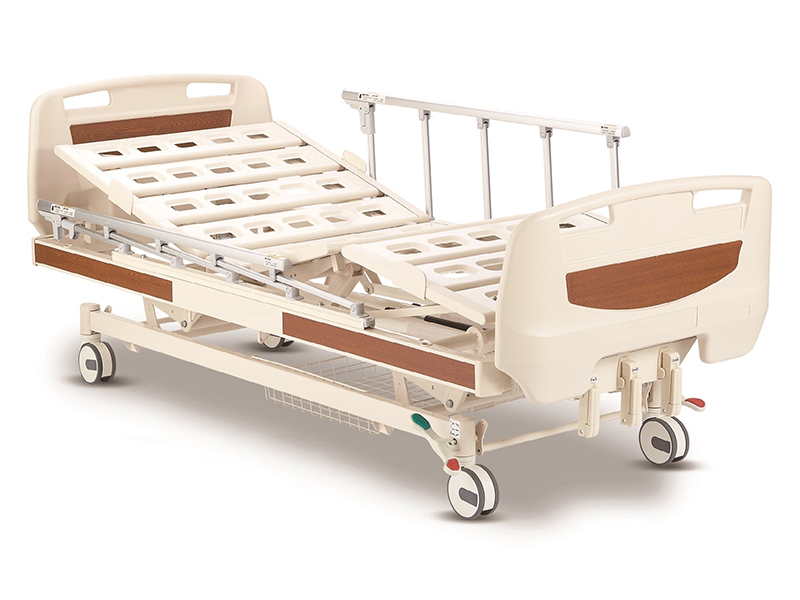
A medical bed — also called a patient bed or clinical bed — differs fundamentally from a domestic bed in its engineering requirements, regulatory obligations, and clinical functionality. It must support patient positioning across multiple anatomical planes, withstand rigorous cleaning protocols, integrate with life-support equipment, and operate reliably under continuous use. Hospitals that specify the wrong bed type for a given ward face clinical workflow disruptions, increased adverse event rates, and costly premature equipment replacement.
This guide addresses the technical distinctions between medical beds and standard beds, departmental configuration standards, structural specifications, and the specialized requirements of critical care environments.
Medical Beds vs Standard Beds: What Sets Them Apart
A standard bed — whether domestic or light-duty hospitality grade — serves a single purpose: supporting a resting person. Medical beds serve dozens of purposes simultaneously. They must:
• Adjust the patient's body position to support respiratory function, circulation, digestion, and wound healing
• Provide attachment points for IV stands, traction equipment, patient lifts, and monitoring devices
• Accept lateral X-ray imaging without rail removal
• Allow emergency access for CPR within seconds
• Operate reliably under 24/7 use with multiple adjustments per hour
• Survive daily chemical disinfection without surface degradation
• Meet international safety standards for entrapment prevention, electrical safety, and load capacity
These requirements drive the entire design process — from motor selection and structural material to rail geometry and mattress platform construction.
Ward Configuration Standards by Department
Different hospital departments have distinct patient bed requirements based on clinical workflows and patient acuity levels.
Internal Medicine Wards
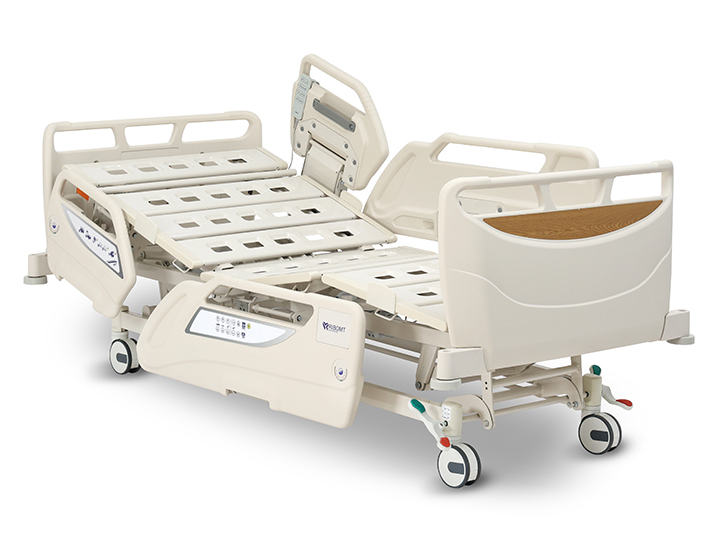
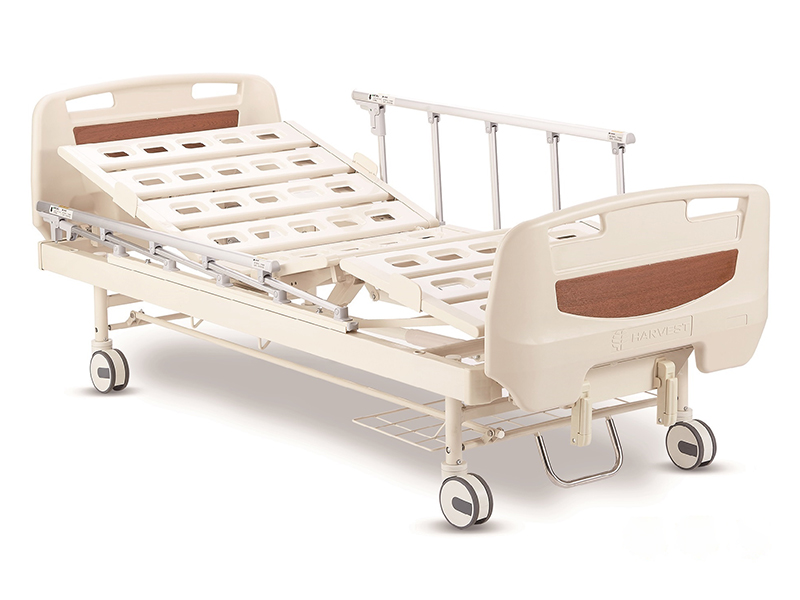
Medical patients in internal medicine typically require 3-function beds: backrest elevation, knee section adjustment, and height control. The emphasis is on patient comfort during extended stays, ease of feeding, and simple repositioning for nursing assessments.
Typical specification:
• 3-function electric adjustment
• ABS collapsible side rails
• 200kg safe working load
• Standard height range: 450-750mm
• Compatible with standard ward mattress (1900mm × 900mm)
Surgical Wards
Post-operative patients need more frequent positioning changes — especially after abdominal, thoracic, or orthopedic procedures. Surgical ward beds should include Trendelenburg and reverse Trendelenburg capability for drainage management and circulatory support.
Typical specification:
• 5-function electric adjustment
• CPR quick-release mechanism on the back section
• Trendelenburg angle: minimum 12° head-down, 12° head-up
• Reinforced frame for patient lifting and transfer device attachment
• IV pole sockets on both sides
Intensive Care Units
ICU beds represent the most technologically complex category. Every design decision reflects the reality that ICU patients cannot reposition themselves and depend entirely on the bed system for postural support, pressure management, and clinical access.
Typical specification:
• 5-function or 7-function electric adjustment
• Integrated weighing scale
• CPR release with single-action mechanism
• Extended height range (minimum 400-850mm) for imaging and procedural access
• Compatibility with continuous lateral rotation therapy mattresses
• Multiple accessory rails for ventilator, infusion pump, and monitor mounting
• Radio-translucent sections for in-bed X-ray imaging
ICARE's CD-805 and CD-806 electric beds meet or exceed these specifications, with 5-function articulation and the structural capacity to support ICU-grade accessory configurations.
Pediatric Wards
Pediatric beds differ in dimensions and safety features:
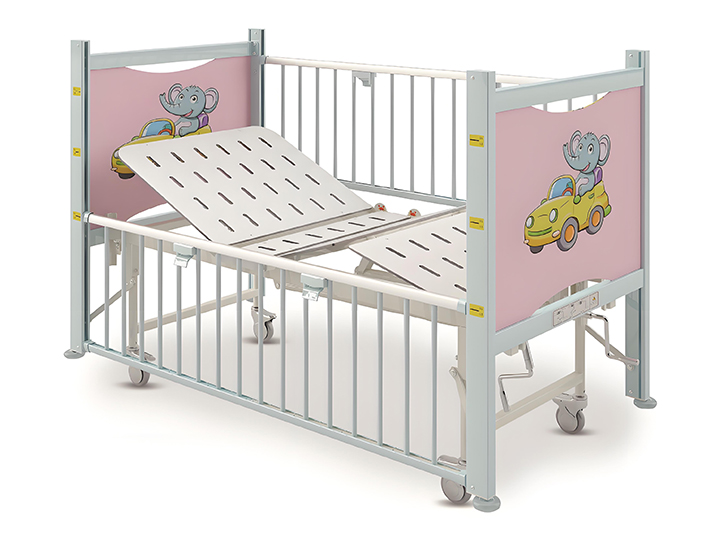
• Smaller mattress platform (typically 1400mm × 700mm for children, 1000mm × 500mm for neonates)
• Higher, fully enclosed side rails to prevent climbing injuries
• Reduced gap dimensions to prevent limb entrapment
• Color-coded or themed aesthetics to reduce patient anxiety
• Parent co-sleeping extension capability for neonatal and toddler units
Obstetric Beds
Labor and delivery beds combine a standard patient bed with delivery-specific features:
• Detachable leg sections for lithotomy positioning
• Stirrup attachments
• Lower height for safe transfer during labor
• Rapid flat positioning for emergency cesarean preparation
Load-Bearing Standards: 200kg to 300kg
The safe working load (SWL) of a medical bed must account for patient weight plus the additional forces generated during repositioning and transfer. A 100kg patient being turned generates lateral forces significantly exceeding static weight.
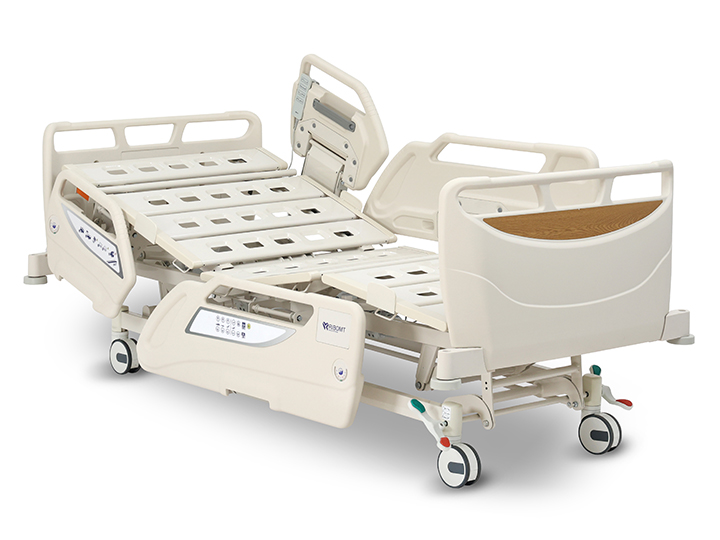
Standard beds: Rated for 200-250kg SWL. This covers the vast majority of adult patients in general wards.
Bariatric beds: Rated for 300-500kg SWL. These beds feature wider platforms (up to 1000mm), reinforced steel frames, wider castors, and additional structural bracing. They are essential in any hospital serving populations with high obesity rates.
The load rating directly influences frame construction. ICARE engineers its bed frames — including the CA-800, CA-801, and CA-802 transfer bed series — with high-strength materials calibrated to deliver the rated capacity without excessive weight penalty. A 300kg-rated bed that weighs 180kg is more practical than one that weighs 250kg, because staff must push it between rooms and reposition it during cleaning.
Height Adjustment Range
Height adjustability serves multiple clinical functions:
• Low position (400-450mm): Fall prevention. When the bed surface is near floor level, a patient rolling out of bed falls a shorter distance. This is critical for elderly, confused, or sedated patients. Many hospitals set beds to low position during nighttime hours.
• Mid position (550-650mm): Caregiver ergonomic alignment. When the mattress surface matches the caregiver's hip height, nursing tasks — bed bathing, wound dressing, catheter care — can be performed without excessive bending. This reduces occupational back injuries among nursing staff.
• High position (750-850mm): Procedural access. During wound care, central line insertion, or physical therapy, raising the bed surface reduces clinician fatigue and improves procedural precision.
• Extra-low position (300-400mm): Psychiatric and falls-risk units benefit from ultra-low beds where the mattress surface sits very close to the floor.
ICARE electric beds offer height ranges that cover the standard clinical spectrum, with the CD-806 model extending the upper range for enhanced procedural access.
CPR Quick-Release Mechanism
In cardiac arrest, every second counts. A patient lying on a raised or articulated bed cannot receive effective chest compressions — the force dissipates into the bed mechanism rather than compressing the sternum against the spine.
The CPR quick-release mechanism — sometimes called "cardiac board" or "flat position release" — drops the back section to flat in a single motion. On ICARE beds, this is achieved by pulling a single lever or pressing a dedicated button, which disengages the back-section actuator and allows the platform to collapse to horizontal under gravity. The entire operation takes 2-3 seconds.
This feature is mandatory on all ICU, surgical, and emergency department beds. It is also strongly recommended for general ward beds, as cardiac events can occur anywhere in a hospital.
Trendelenburg and Reverse Trendelenburg Design
Trendelenburg position: The patient lies flat with the entire bed surface tilted head-down at 12-20 degrees. This position shifts abdominal contents toward the diaphragm and increases venous return to the heart. Clinical applications include:
• Hypotension management
• Lower extremity surgical access
• Central venous catheter insertion
Reverse Trendelenburg position: Head-up tilt with the foot end lowered. Applications include:
• Reducing intracranial pressure
• Gastroesophageal reflux management
• Head and neck surgical access
Implementing these positions requires a robust pivot mechanism and motor capacity to tilt a loaded bed (patient + platform = potentially 300kg+) without stalling or drifting. ICARE's 5-function and 7-function bed models include calibrated Trendelenburg positioning with reliable motor hold.
Special Requirements for ICU Beds
ICU beds demand capabilities beyond standard ward equipment:
Integrated weighing: ICU patients require hourly fluid balance monitoring. Removing a critically ill patient from bed to a standing scale is impractical and dangerous. Built-in load cells provide continuous weight measurement with ±0.5kg accuracy.
Battery backup: If hospital power fails, the ICU bed must maintain critical functions — particularly the ability to return to flat position for CPR and to lower height for safe evacuation. ICARE electric beds are available with battery backup options that maintain essential operations during power interruption.
Radiolucency: ICU patients often undergo portable X-ray imaging in bed. The bed must include radiolucent sections in the platform — typically in the torso area — so the image cassette can slide beneath the patient without requiring a full transfer.
Accessory integration: The bed frame must accommodate ventilator mounting arms, infusion pump poles, drainage bag hooks, and monitoring equipment trays without compromising structural integrity or creating cable management hazards.
ICARE Medical Bed Series
ICARE (Wuxi Icare Medical Technology Co., Ltd.) produces medical bed systems designed to meet international standards across all ward types:
| Product Model | Type | Functions | Key Feature |
| CD-804 | Electric Medical Bed | 3-function | General ward standard |
| CD-805 | Electric Medical Bed | 5-function | ICU/high-dependency capable |
| CD-806 | Electric Medical Bed | 5-function | Extended height range |
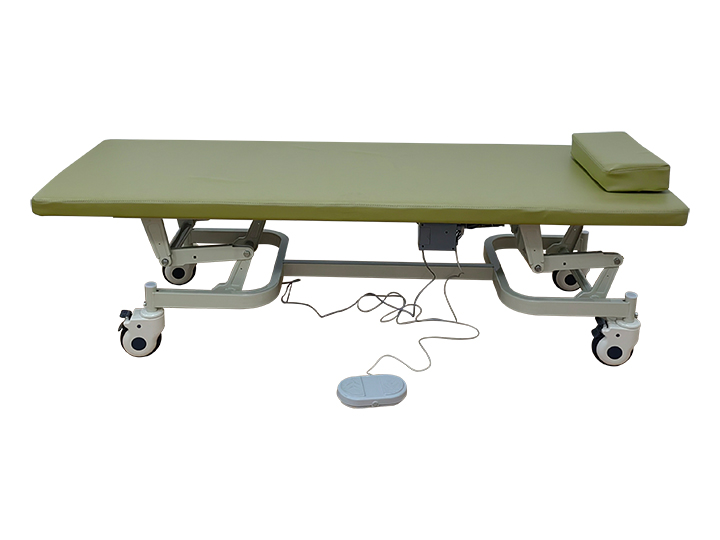
| CA-800 | Transfer Bed | Manual/electric | Inter-department patient transfer |
| CA-801 | Transfer Bed | Manual/electric | Compact design |
| CA-802 | Transfer Bed | Manual/electric | Heavy-duty frame |
| CC-800 | Emergency/Care Bed | Multiple | Emergency department |
| CC-806 | Emergency/Care Bed | Multiple | Advanced emergency care |
Recommended News
-
Hospital lift bed selection and usage scenarios
-
Process analysis and practical skills of ward nursing from admission to rehabilitation
-
Functional characteristics and selection of medical diagnosis and treatment examination bed
-
Rehabilitation bed: the key to improving the quality of care for long-term bedridden patients
-
Smart elderly care technology empowers and opens up a new era of elderly care services
-
Function analysis and selection precautions of electric smart bed
-
Guidelines for selecting rehabilitation equipment and analysis of common types
-
Function analysis and selection skills of companion bed
-
New intelligent and community-based development of home-based elderly care
◇◇ Related Content ◇◇
- How Do I Verify The Hospital Bed Factory Before Ordering?
- How Do I Compete With Direct Manufacturer Sales As A Hospital Bed Distributor?
- How Do I Verify The Factory Is Real Before Ordering Hospital Beds?
- What Documents Are Required For Hospital Bed Government Tenders?
- Hospital Bed Government Tender For 200 Beds (Full Guide)
- How Much Does OEM Mold Setup Cost For Hospital Beds?
- Emergency Hospital Bed Order: What "30-Day Delivery" Really Means
- How Long Does OEM Hospital Bed Production Take?
- Hospital Bed Spare Parts Planning: What To Stock For A 50-Bed Fleet