News
News
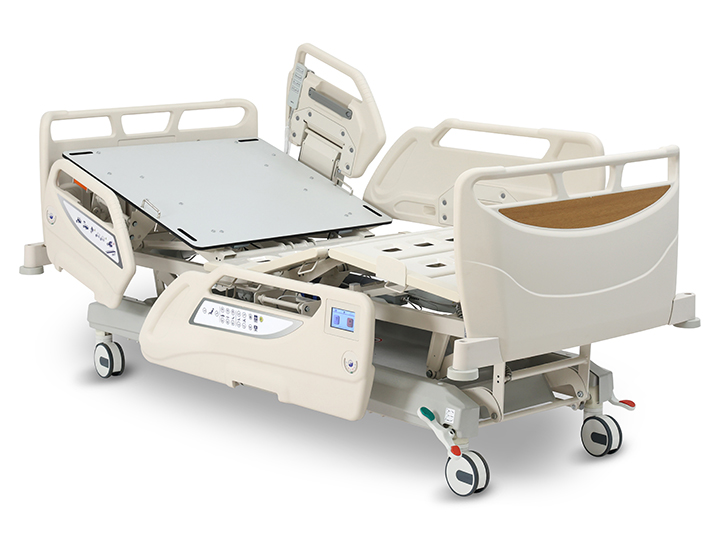
Medical nursing bed: the key to improving the quality of medical care
As an indispensable infrastructure in medical facilities, the design of medical nursing beds directly affects the rehabilitation experience of patients and the work efficiency of medical staff. With the advancement of medical technology, Medical beds have developed various intelligent and humanized functions, becoming an important indicator for measuring the service level of medical institutions.
Analysis of Core Functions of Medical Beds
1. Height adjustment system
By using electric or manual devices to achieve the overall lifting and lowering of the bed, it can adapt to the operational needs of medical staff of different heights, effectively reducing the risk of occupational injuries. Simultaneously supporting seamless integration with devices such as wheelchairs and stretchers, especially suitable for postoperative transportation scenarios.
2. Position adjustment module
-Bedhead/footrest independent lifting: supports 0° -75° Lift the back to meet the patient's needs for eating, examination, etc; Legs 0° -40° The lifting function can promote blood circulation.
-Full bed tilt function: Some high-end models are equipped with 0-12° The overall tilt adjustment is suitable for special treatment position requirements.
3. Safety protection device
The double-sided guardrails adopt anti pinch design, combined with one click locking function, which can prevent patients from falling without affecting nursing operations. The bed is equipped with four-way brake rollers to achieve a balance between mobility and stability.
4. Intelligent extension interface
Integrated electronic control panel, supporting docking with auxiliary devices such as urinary and fecal care systems, physical sign monitoring modules, etc. Some models have built-in± The weighing function with a precision of 0.1kg can achieve precise nutrition management.
Comparison of mainstream medical bed types
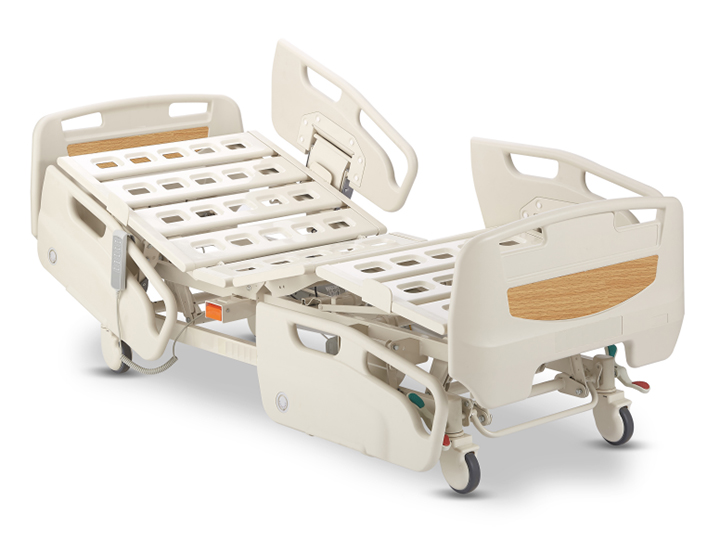
1. Electric nursing bed
Fully automatic adjustment is achieved through motor drive, equipped with memory storage function, and 3-5 commonly used positions can be preset. Suitable for long-term bedridden patients and intensive care units, but attention should be paid to the configuration of emergency power supply plans.
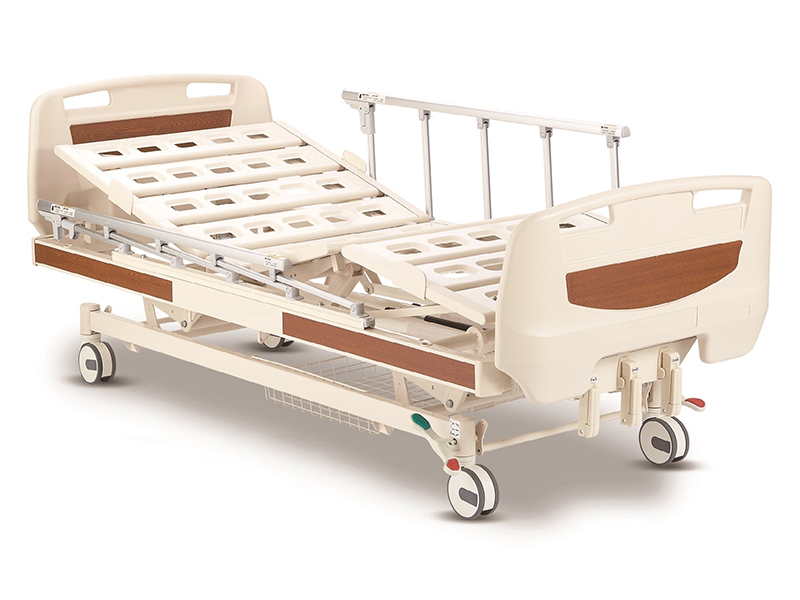
2. Manual nursing bed
The use of mechanical adjustment devices has the advantages of low maintenance costs and low failure rates. Suitable for primary healthcare institutions or budget limited scenarios, but with high physical requirements for nursing staff.
3. Multi functional nursing bed
Integrated position management, rehabilitation training, intelligent monitoring and other composite functions, some models are equipped with hip lifting modules and quick bed sheet changing systems, which can meet special needs such as surgical diagnosis and imaging examination.
Scientific selection advice
1. Dimension of Needs Assessment
-Patient's physical condition: For disabled patients, automatic turning function should be given priority, and postoperative patients should focus on position adjustment accuracy
-Usage scenario characteristics: Emergency departments need to strengthen their rapid transportation capabilities, and elderly wards should pay attention to pressure ulcer prevention design
-Space adaptation requirements: Measure the width of the ward door and activity area, and choose a detachable guardrail or foldable design
2. Quality certification standards
When making a purchase, it is necessary to verify whether the product meets industry standards, with a focus on confirming the durability and load-bearing performance of the motor.
3. Service guarantee system
Priority should be given to suppliers who provide on-site installation and operation training, and the warranty period for core components should not be less than 3 years. Suggest experiencing the sensitivity and noise control level of the operation panel on site.
Medical institutions should establish a dynamic bed management system based on actual patient volume and conduct regular functional maintenance and testing. Through scientific selection and standardized use, medical nursing beds will become an important force in improving the quality of medical services and enhancing patients' medical experience.
Recommended News
-
Hospital lift bed selection and usage scenarios
-
Process analysis and practical skills of ward nursing from admission to rehabilitation
-
Functional characteristics and selection of medical diagnosis and treatment examination bed
-
Rehabilitation bed: the key to improving the quality of care for long-term bedridden patients
-
Smart elderly care technology empowers and opens up a new era of elderly care services
-
Function analysis and selection precautions of electric smart bed
-
Guidelines for selecting rehabilitation equipment and analysis of common types
-
Function analysis and selection skills of companion bed
-
New intelligent and community-based development of home-based elderly care
◇◇ Related Content ◇◇
- How Do I Verify The Hospital Bed Factory Before Ordering?
- How Do I Compete With Direct Manufacturer Sales As A Hospital Bed Distributor?
- How Do I Verify The Factory Is Real Before Ordering Hospital Beds?
- What Documents Are Required For Hospital Bed Government Tenders?
- Hospital Bed Government Tender For 200 Beds (Full Guide)
- How Much Does OEM Mold Setup Cost For Hospital Beds?
- Emergency Hospital Bed Order: What "30-Day Delivery" Really Means
- How Long Does OEM Hospital Bed Production Take?
- Hospital Bed Spare Parts Planning: What To Stock For A 50-Bed Fleet