News
News
Nursing Bed Buying Guide: Comprehensive Analysis Of Types, Functions, And Safety Considerations
A nursing bed is a specialized bed designed for patients or the elderly with limited mobility or those who are bedridden for long periods. It not only provides basic resting functions but also integrates multiple care-assisting features, aiming to enhance the user's comfort and quality of life while reducing the burden on caregivers. Given the specific nature of their user base, nursing beds are subject to far stricter requirements regarding safety and stability in their design and manufacturing compared to ordinary beds.
Faced with a variety of products on the market, understanding the main types of nursing beds and their core functions is the first step in making the right choice. According to the driving method and functional configuration, nursing beds can be roughly divided into the following categories:
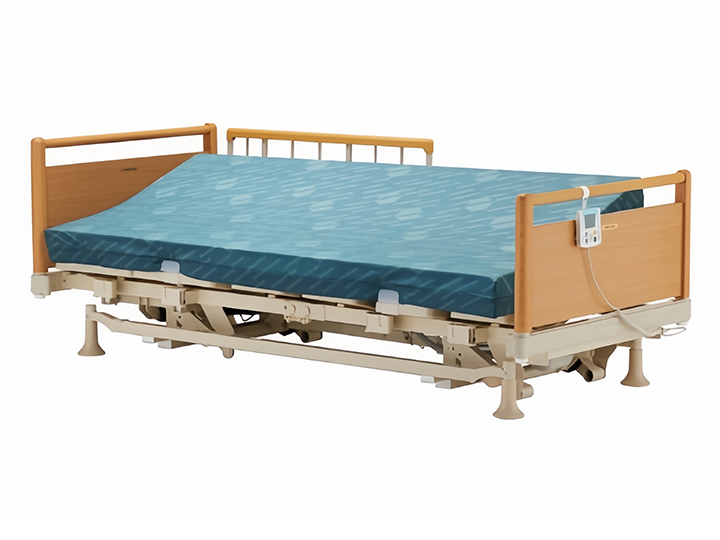
Electric nursing beds are a common choice in modern care. Equipped with electric drive systems, they can easily perform functions such as backrest elevation, leg elevation, and even full-body tilting (e.g., the Trendelenburg position). This convenient electric assistance helps users complete actions such as sitting up, eating, reading, or turning over independently or with minimal assistance from family members, greatly promoting autonomy and blood circulation. To ensure safety, high-quality electric nursing beds are usually standard equipped with safety side rails, emergency stop buttons, and waterproof and durable controllers, ensuring reliable operation in various situations.
Manual nursing beds rely on mechanical structures to adjust posture through hand cranks or similar methods. Their biggest advantages are relatively simple structure, more economical price, and no dependence on electricity, making them suitable for home environments with limited budgets or unstable power supply. Although caregivers need to exert some physical effort, their core lifting functions can still effectively meet basic care needs.
For users with complex care needs, multi-functional nursing beds provide a more comprehensive solution. They often integrate advanced functions such as side-turning assistance, full-body rotation, vibration massage, toilet hole docking, and even weight monitoring on the basis of electric beds. This type of bed is designed to provide all-round support for users with a higher degree of disability or those in need of specific rehabilitation training, and is a powerful assistant in professional care institutions or home intensive care.
When choosing a nursing bed for yourself or your family, you need to comprehensively evaluate multiple factors:
1. User's Condition: Clearly define the patient's physical condition, mobility, weight, and specific medical care needs (such as whether pressure ulcer prevention is needed, whether it is convenient for feeding, etc.).
2. Usage Environment: Consider the size of the home space, door width (to ensure the bed can be pushed in), and whether there is a stable power supply beside the bed (for electric beds).
3. Functional Requirements: Based on actual care needs, list the necessary functions (such as back elevation) and optional functions to avoid paying extra for unnecessary features.
4. Quality and Safety: This is the top priority. Be sure to choose products produced by regular manufacturers and in line with national safety standards. Carefully check whether the bed structure is firm, the drive is smooth, whether safety devices such as side rails are reliable, and understand the warranty and after-sales service policies.
Choosing a suitable nursing bed is a key investment in improving the patient's quality of life dignity and care quality. Before making a final decision, combining the evaluation and suggestions of professional doctors or nurses will make your choice more scientific and reassuring.
Recommended News
-
Hospital lift bed selection and usage scenarios
-
Process analysis and practical skills of ward nursing from admission to rehabilitation
-
Functional characteristics and selection of medical diagnosis and treatment examination bed
-
Rehabilitation bed: the key to improving the quality of care for long-term bedridden patients
-
Smart elderly care technology empowers and opens up a new era of elderly care services
-
Function analysis and selection precautions of electric smart bed
-
Guidelines for selecting rehabilitation equipment and analysis of common types
-
Function analysis and selection skills of companion bed
-
New intelligent and community-based development of home-based elderly care
◇◇ Related Content ◇◇
- How Do I Verify The Hospital Bed Factory Before Ordering?
- How Do I Compete With Direct Manufacturer Sales As A Hospital Bed Distributor?
- How Do I Verify The Factory Is Real Before Ordering Hospital Beds?
- What Documents Are Required For Hospital Bed Government Tenders?
- Hospital Bed Government Tender For 200 Beds (Full Guide)
- How Much Does OEM Mold Setup Cost For Hospital Beds?
- Emergency Hospital Bed Order: What "30-Day Delivery" Really Means
- How Long Does OEM Hospital Bed Production Take?
- Hospital Bed Spare Parts Planning: What To Stock For A 50-Bed Fleet